
Modal Analysis System – High-Precision Experimental Modal Analysis Solution from ECON
Table of Contents
What Is a Modal Analysis System?
In modern product development, understanding the dynamic characteristics of structures is essential to prevent resonance, reduce vibration, improve durability, and optimize product performance.
Modal Analysis is a testing technique used to determine the inherent dynamic properties of a structure, including:
-
Natural Frequency
-
Mode Shape
-
Damping Ratio
-
Dynamic Characteristics
These parameters enable engineers to understand how a structure behaves under dynamic loading, validate CAE/FEM simulations, identify structural weaknesses, and optimize designs before mass production.
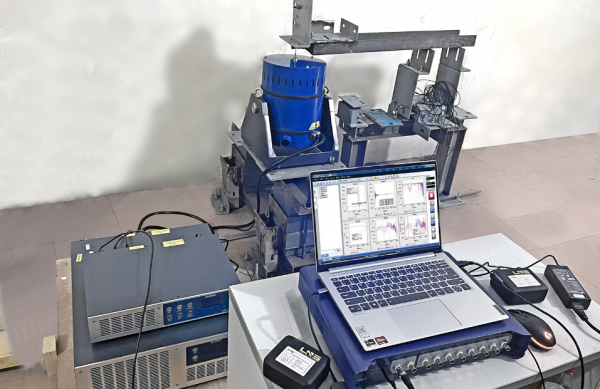
Experimental Modal Analysis (EMA) is typically performed using a combination of a modal exciter, accelerometers, force sensors, and a dynamic signal analyzer.
ECON Modal Analysis Solution
The ECON Modal Analysis System is a complete solution for high-precision structural vibration testing and modal parameter identification.
The system integrates advanced hardware and software, allowing engineers to perform Experimental Modal Analysis efficiently across various industries.
A typical system consists of:
-
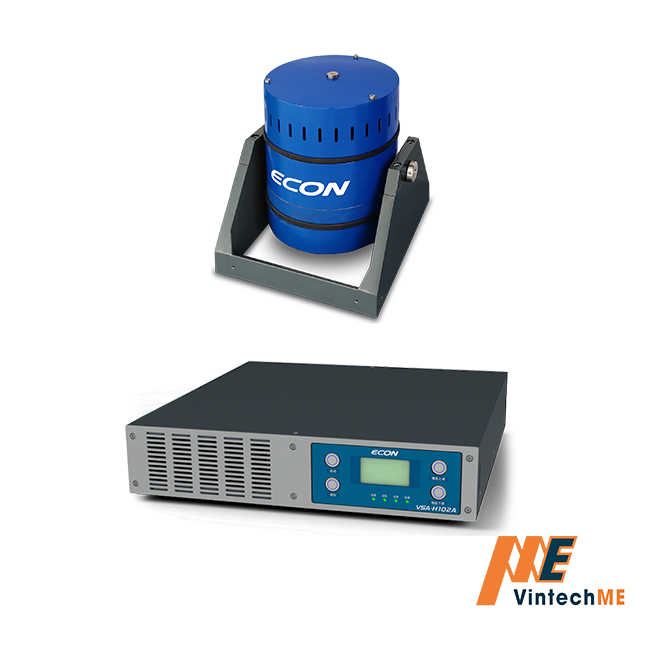
Modal Exciter
-
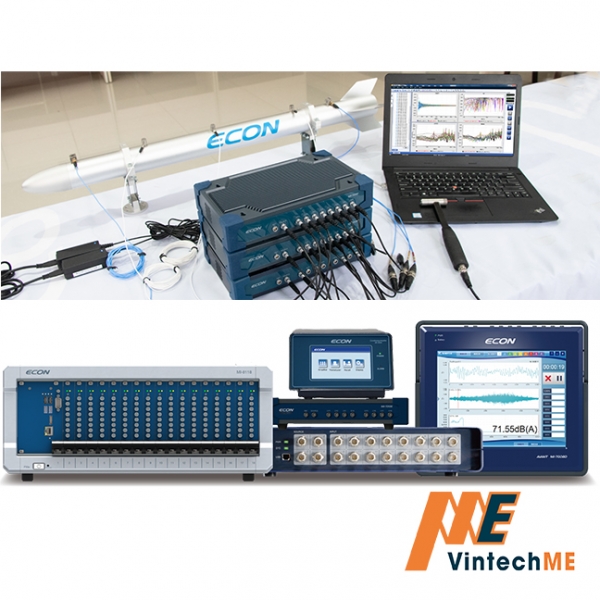
Dynamic Signal Analyzer
-
Mini Power Amplifier
-
Accelerometers
-
Force Sensor or Impact Hammer
-
Modal Analysis Software
-
Mounting Fixtures and Cables
The solution supports both Modal Exciter Testing and Impact Hammer Testing, while remaining compatible with professional modal analysis software such as Modal Genius and ME'scope.
How Does the Modal Analysis System Work?
A typical Experimental Modal Analysis process includes the following steps:
-
Excite the test specimen using either a Modal Exciter or an Impact Hammer.
-
Accelerometers measure the vibration response of the structure.
-
The Dynamic Signal Analyzer simultaneously acquires all response signals.
-
The software calculates the Frequency Response Functions (FRFs).
-
Modal parameters are extracted, including:
-
Natural Frequency
-
Mode Shape
-
Modal Damping
-
Modal Mass
-
Modal Stiffness
-
The results provide a comprehensive understanding of the structural dynamic behavior, enabling engineers to improve product performance and reliability.
Key Features of the ECON Modal Analysis System
Wide Frequency Range
The VE-M Series Modal Exciter supports excitation frequencies from DC up to 10,000 Hz, covering the majority of industrial and research modal testing applications.
High Excitation Force
Multiple shaker models are available with excitation forces ranging from 100 N to 1,000 N, making the system suitable for both lightweight components and large structures.
High Measurement Accuracy
The Dynamic Signal Analyzer offers:
-
Simultaneous multi-channel data acquisition
-
Anti-aliasing filters
-
24-bit high-resolution measurement
-
High-accuracy frequency spectrum analysis
Multiple Excitation Methods
The system supports various excitation signals, including:
-
Sine Sweep
-
Random Excitation
-
White Noise
-
Impact Hammer
This flexibility allows engineers to select the most appropriate testing method for different applications.
Expandable Architecture
The Dynamic Signal Analyzer supports configurations from 4 to 64 channels, with expansion capability to thousands of synchronized channels for large-scale testing.
Typical Technical Specifications
| Specification | Value |
|---|---|
| Modal Exciter Model | VE-51100M |
| Maximum Excitation Force | 1,000 N |
| Frequency Range | 2 – 6,500 Hz |
| Maximum Acceleration | 600 m/s² |
| Maximum Payload | 20 kg |
| Maximum Stroke (Peak-to-Peak) | 25.4 mm |
| Mounting Thread | M6 |
| Cooling Method | Air Cooling |
| Exciter Weight | 130 kg |
| Dimensions | 472 × 394 × 510 mm |
| Power Amplifier | VSA-H152A |
| Amplifier Power | 1,500 VA |
| Dynamic Signal Analyzer | MI-7208 |
| Excitation Methods | Modal Exciter or Impact Hammer |
| Compatible Software | Modal Genius, ME'scope, and other modal analysis software |
Specifications may vary depending on the selected configuration.
Applications of the Modal Analysis System
The ECON Modal Analysis System is widely used in various industries.
Automotive Industry
-
Body-in-White (BIW)
-
Vehicle Doors
-
Hood
-
Tailgate
-
Seats
-
Instrument Panels
-
Steering Systems
-
Suspension Systems
-
Front and Rear Subframes
-
Electric Motors
-
Battery Packs
Aerospace Industry
-
Aircraft Wings
-
Aircraft Structures
-
UAVs
-
Drones
-
Missiles
-
Satellites
Electronics Industry
-
Printed Circuit Boards (PCB)
-
Servers
-
Electronic Modules
-
Camera Systems
-
Telecommunication Equipment
Mechanical Engineering
-
CNC Machines
-
Industrial Robots
-
Rotating Machinery
-
Turbines
-
Generators
-
Machine Tools
Civil Engineering
-
Bridges
-
Buildings
-
Steel Structures
-
Railway Infrastructure
-
Vibration Isolation Systems
Benefits of Experimental Modal Analysis
Implementing Modal Analysis during product development provides significant engineering benefits, including:
-
Early identification of resonance problems
-
Reduction of vibration and noise (NVH)
-
Improved structural durability
-
Optimized product design
-
Reduced prototype iterations
-
Enhanced product reliability
-
Validation of CAE/FEA simulation models
-
Shortened product development cycles
Why Choose VintechME?
VintechME is a leading supplier of testing and measurement solutions in Vietnam, providing complete support from system consultation and equipment selection to installation, training, and after-sales service.
Our services include:
-
Professional Modal Analysis consulting
-
Genuine ECON Technologies equipment
-
System installation and commissioning
-
Operator training and application support
-
Calibration, maintenance, and long-term technical support
Contact VintechME
If you are looking for a professional Modal Analysis System, Experimental Modal Analysis (EMA) Equipment, or a complete Structural Dynamics Testing Solution, VintechME is ready to support your testing and research requirements.
VINTECHME VIETNAM
Hotline: +84 966 252 565
Email: info@vintechme.com
Website: https://vintechme.com


 Tiếng Việt
 English

