Table of Contents
Overview
A Temperature & Humidity Chamber is a critical piece of equipment used in laboratories, QA/QC, and R&D environments. It is designed to simulate harsh environmental conditions such as high temperature, low temperature, and humidity to evaluate product durability.
During actual operation, VintechME received a common issue reported by a customer:
The temperature & humidity chamber was icing up (freezing) during operation.
This is a serious problem because it can directly affect:
- Accuracy of test results
- Ability to control temperature and humidity
- Equipment lifespan
Equipment Status at Customer Site
After receiving the information, VintechME engineers conducted an on-site inspection and recorded the following:
- The chamber was operating normally in cooling mode
- However, the evaporator coil was heavily iced after a period of operation
- Temperature inside the chamber was unstable
- Humidity did not meet the set values
- Cooling performance significantly decreased
These are typical signs of a refrigeration system issue.
Causes of Icing in Temperature & Humidity Chambers
After detailed inspection, engineers identified the main cause:
1. Refrigerant shortage (Low refrigerant level)
This is the most common cause.
When the system lacks refrigerant:
- Evaporating pressure drops abnormally
- Evaporator temperature becomes too low
- Moisture in the air condenses and freezes on the evaporator
Result: Ice/frost forms on the evaporator
In addition to low refrigerant, the system may also have:
- Refrigerant leakage at joints or connections
- Unstable expansion valve operation
- Insufficient airflow through the evaporator
However, in this case, low refrigerant was the main root cause.
VintechME Inspection and Repair Process
To completely resolve the issue, VintechME engineers followed these steps:
Step 1: Check the refrigeration system
- Measure refrigerant pressure
- Check inlet/outlet temperatures
- Inspect evaporator condition
Conclusion: Low pressure – refrigerant shortage
Step 2: Leak inspection
- Charge nitrogen for pressure testing
- Identify leak locations (if any)
- Repair welding points / leakage points
Step 3: Recharge refrigerant
- Perform system vacuuming
- Recharge correct refrigerant type according to chamber specifications
- Adjust pressure to standard operating levels
Step 4: Functional testing
- Run the chamber under various temperature/humidity conditions
- Monitor evaporator operation
- Ensure no icing occurs
Results After Repair
After the repair:
- The chamber operates stably
- No more icing/freezing
- Temperature and humidity meet set values
- Cooling performance is fully restored
Recommendations from VintechME
To prevent icing issues from recurring, customers should:
- Periodically check refrigerant levels
- Perform maintenance every 6 months or at least once per year
- Regularly inspect for refrigerant leaks
- Avoid continuous overload operation for long periods
The picture of On-site Repair Activities by VintechME Engineers
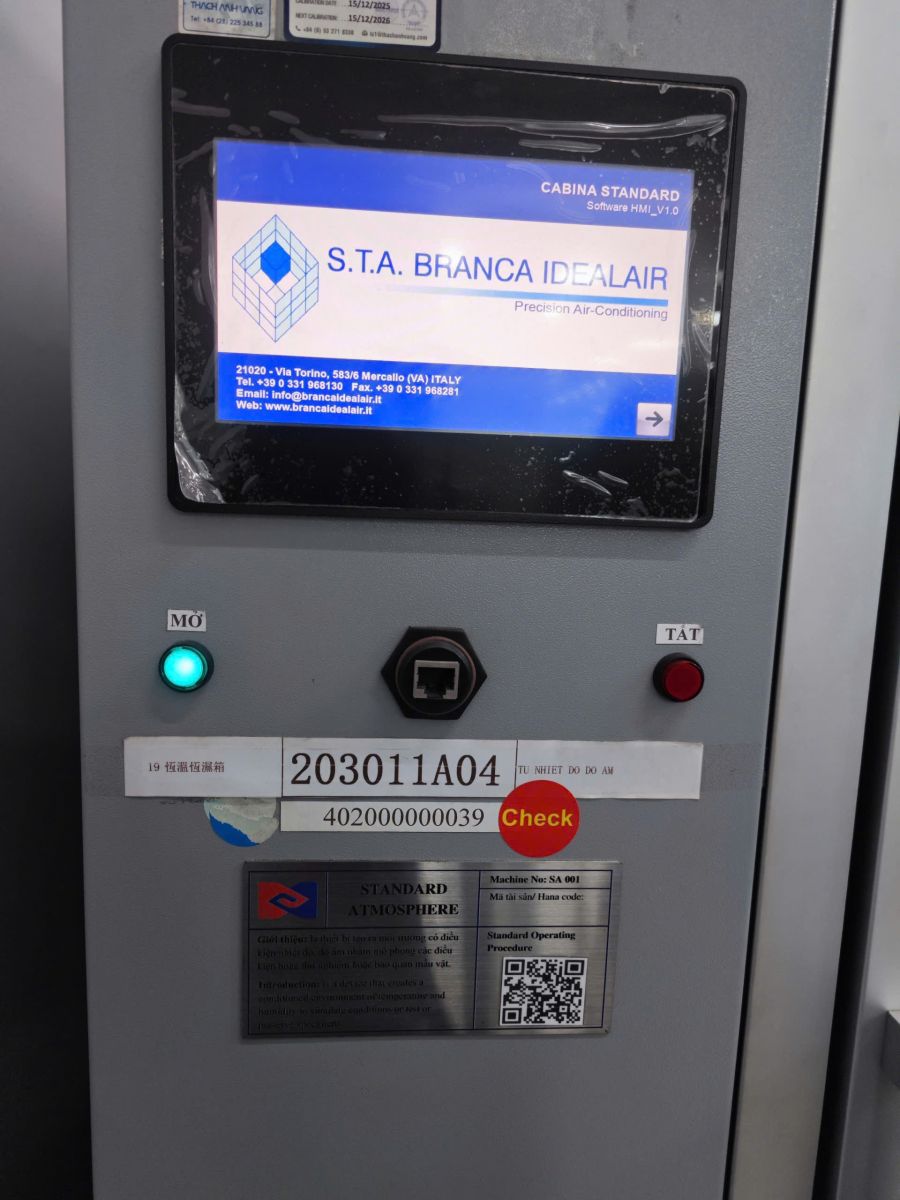
- Inspection of chamber condition at site
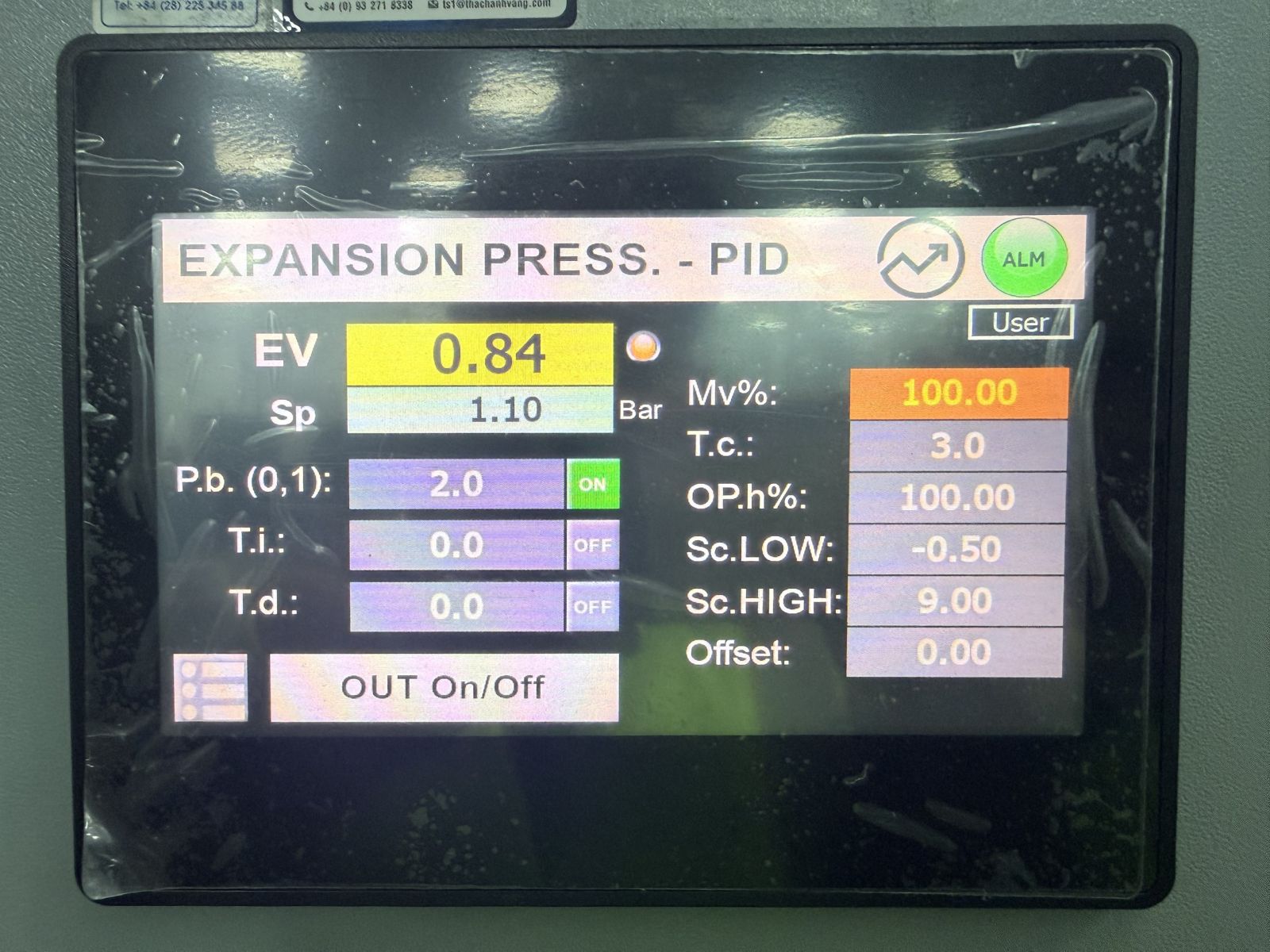
- Measurement of operating pressure
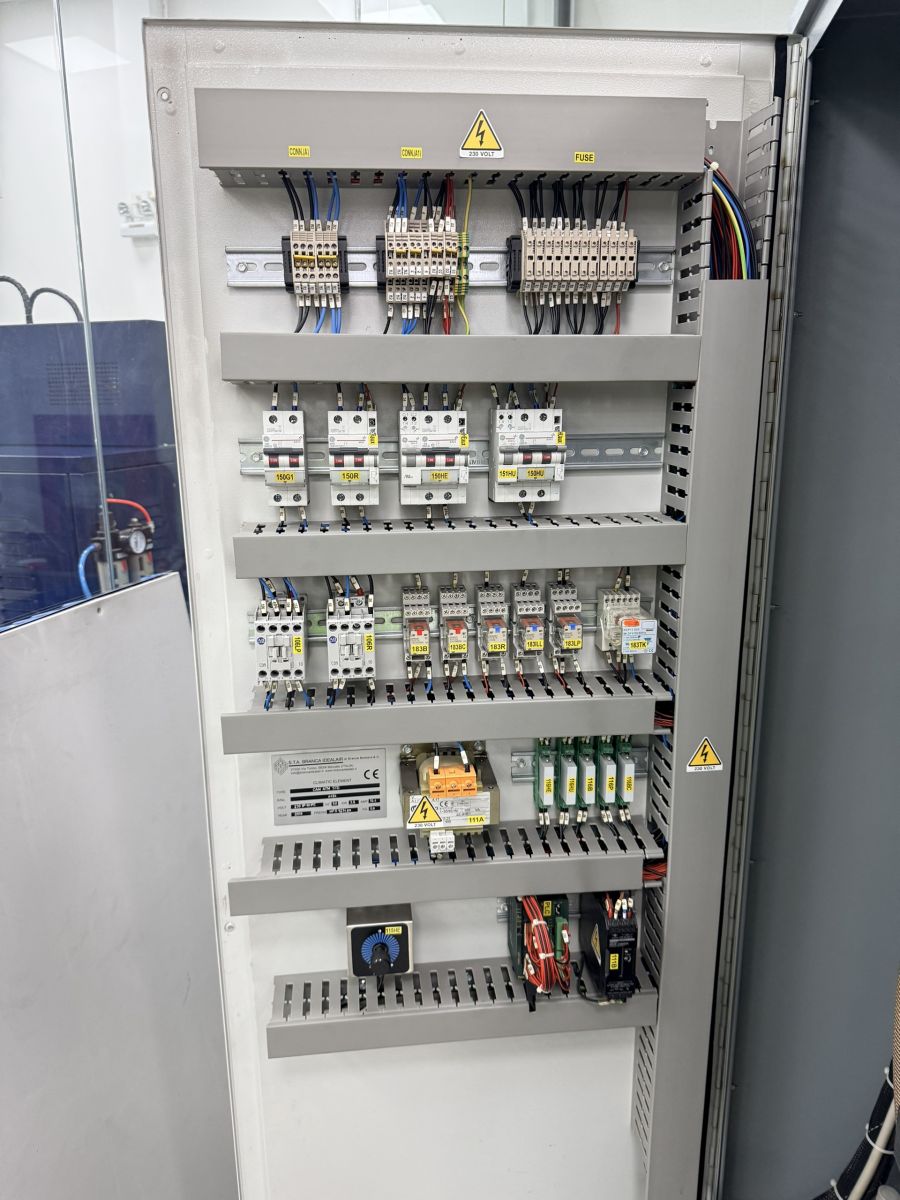
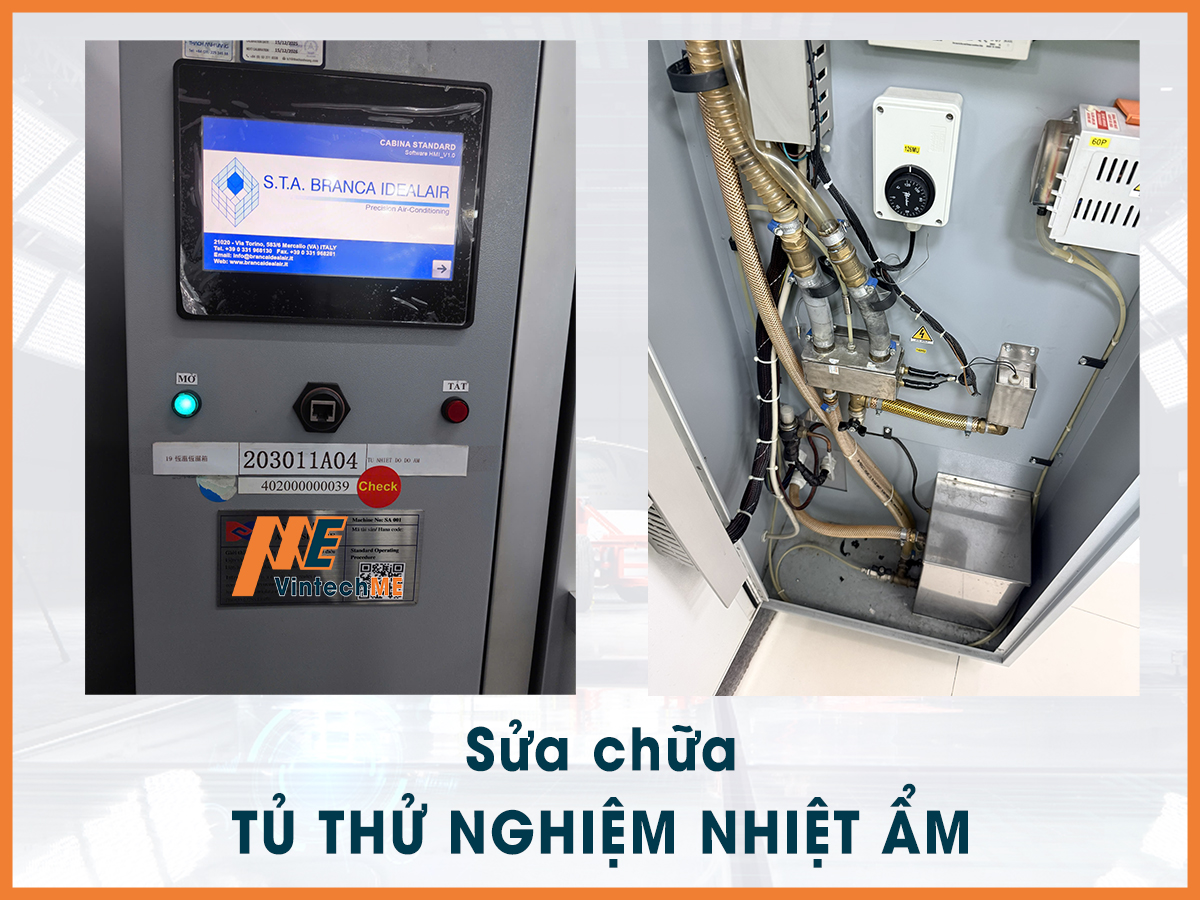
- Inspection of electrical system
- Compressor inspection
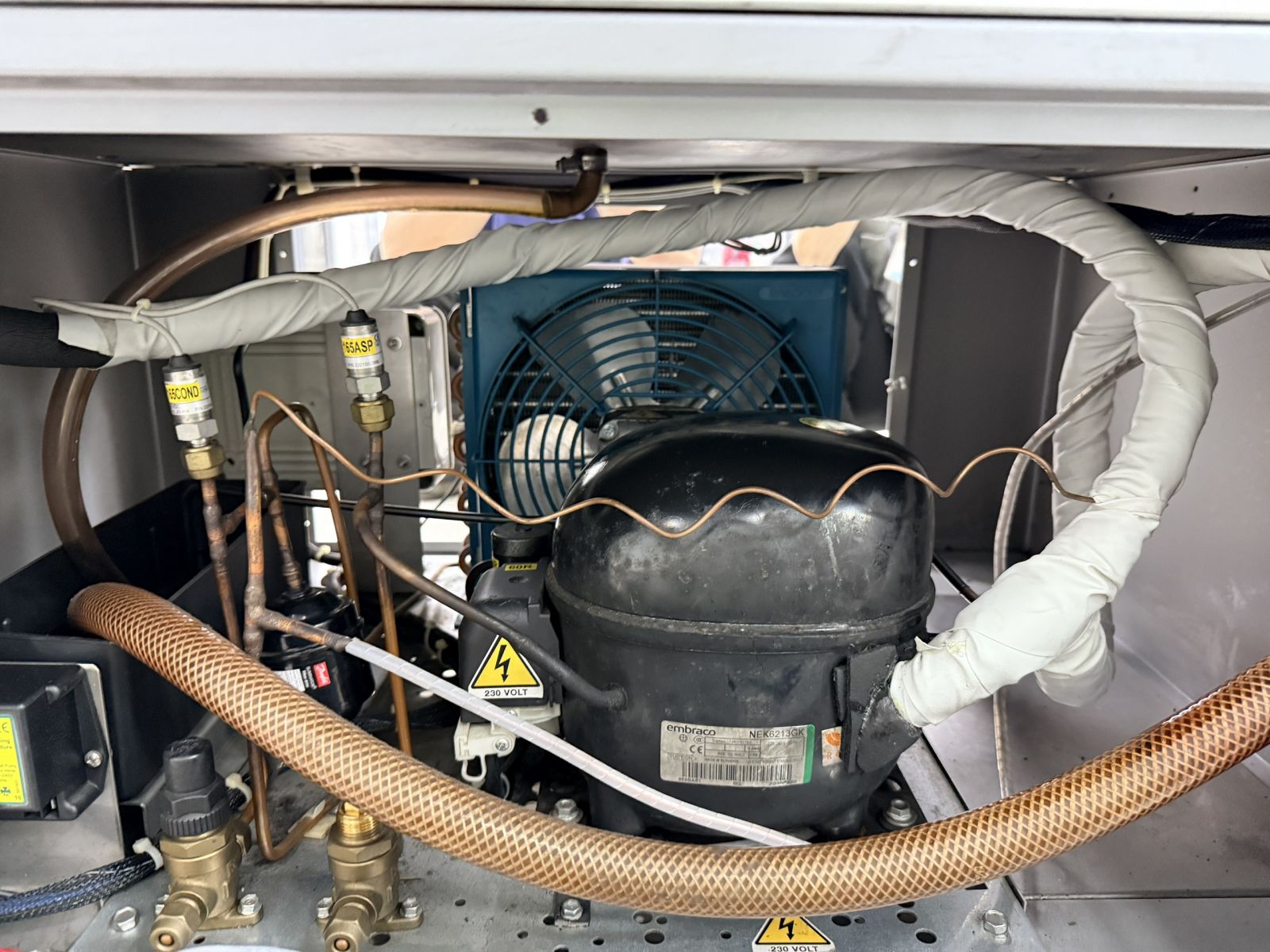
- Pressure check of compressor and system
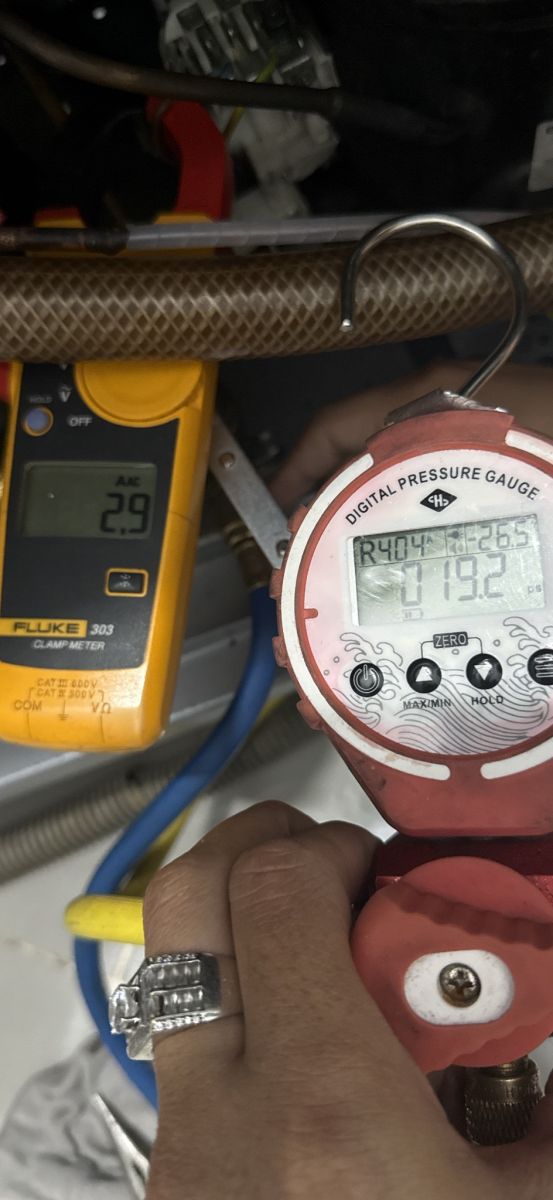
- Review of alarm/error history
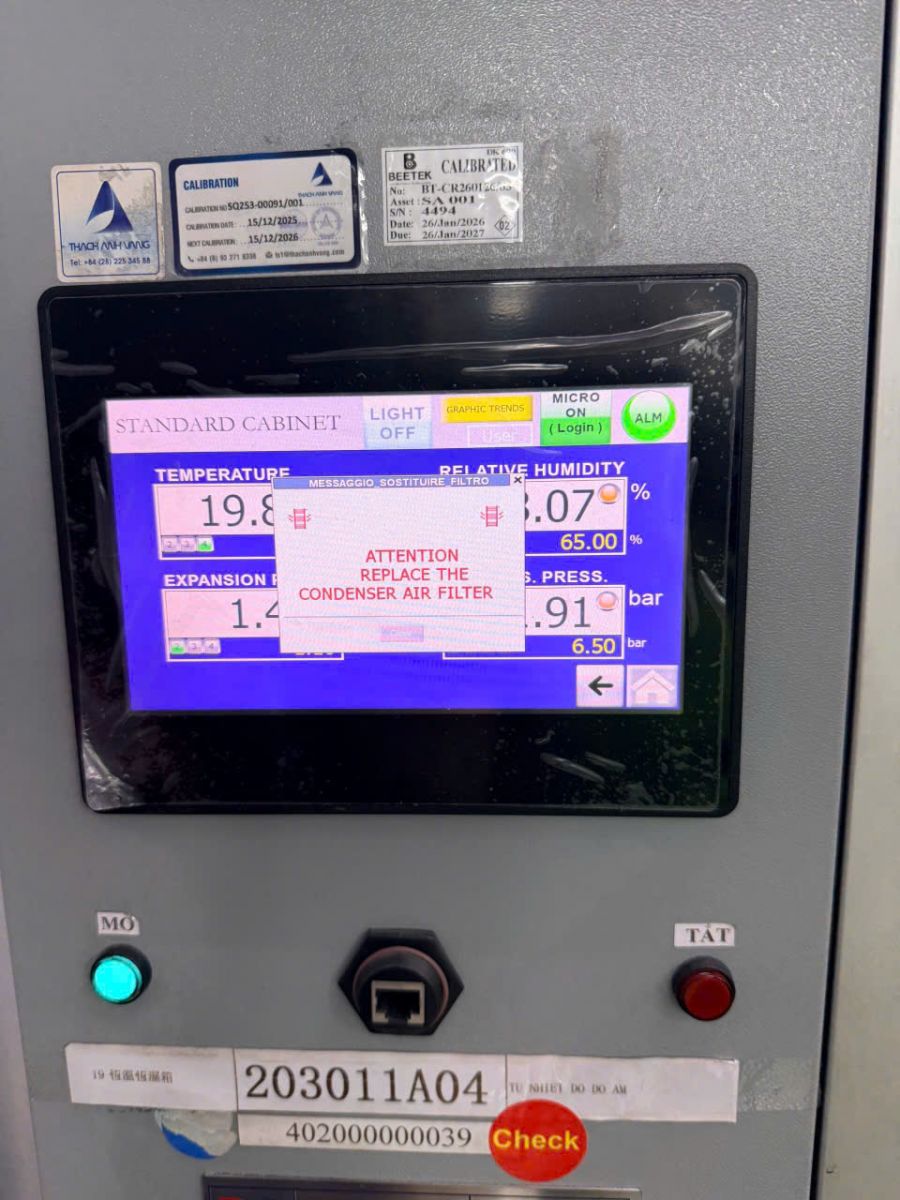
- Inspection of chamber alarm system
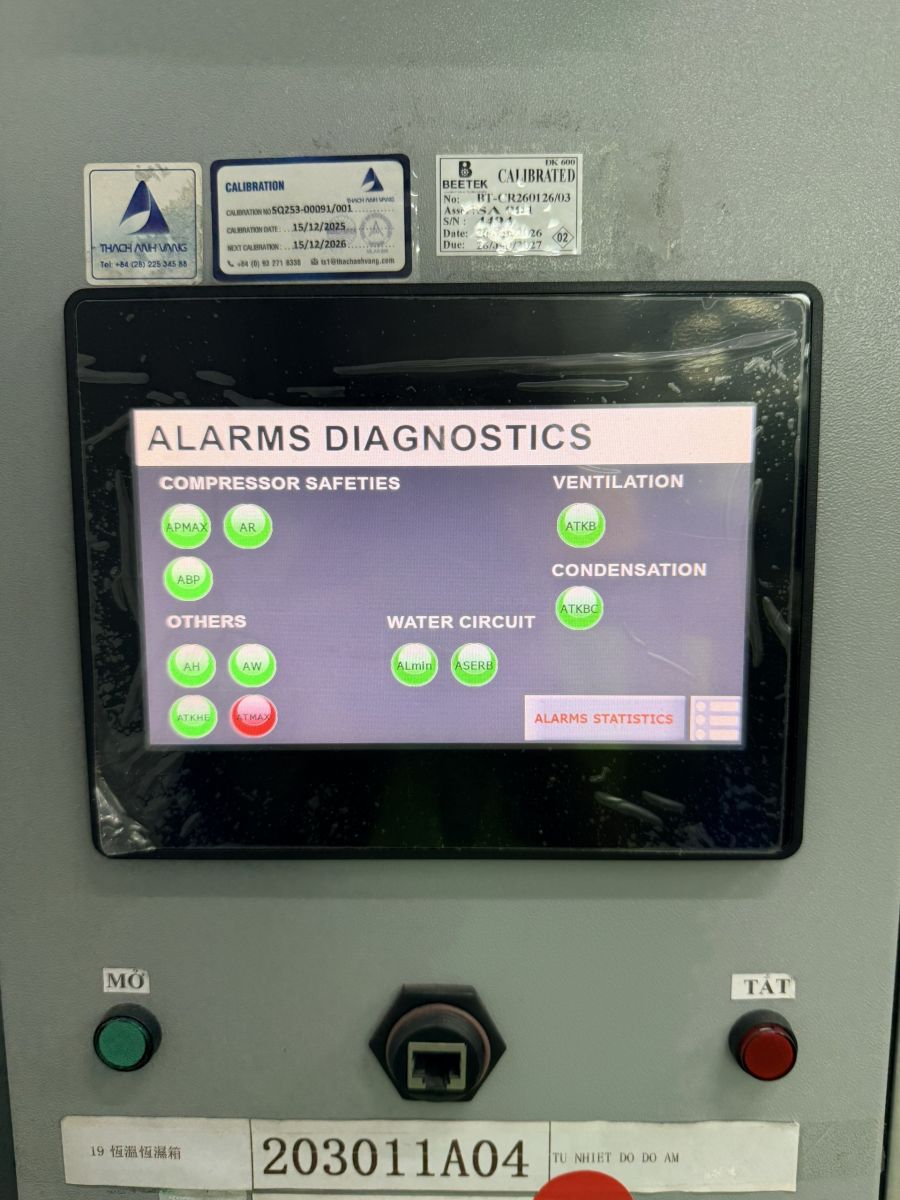
- Inspection of humidification heater tank
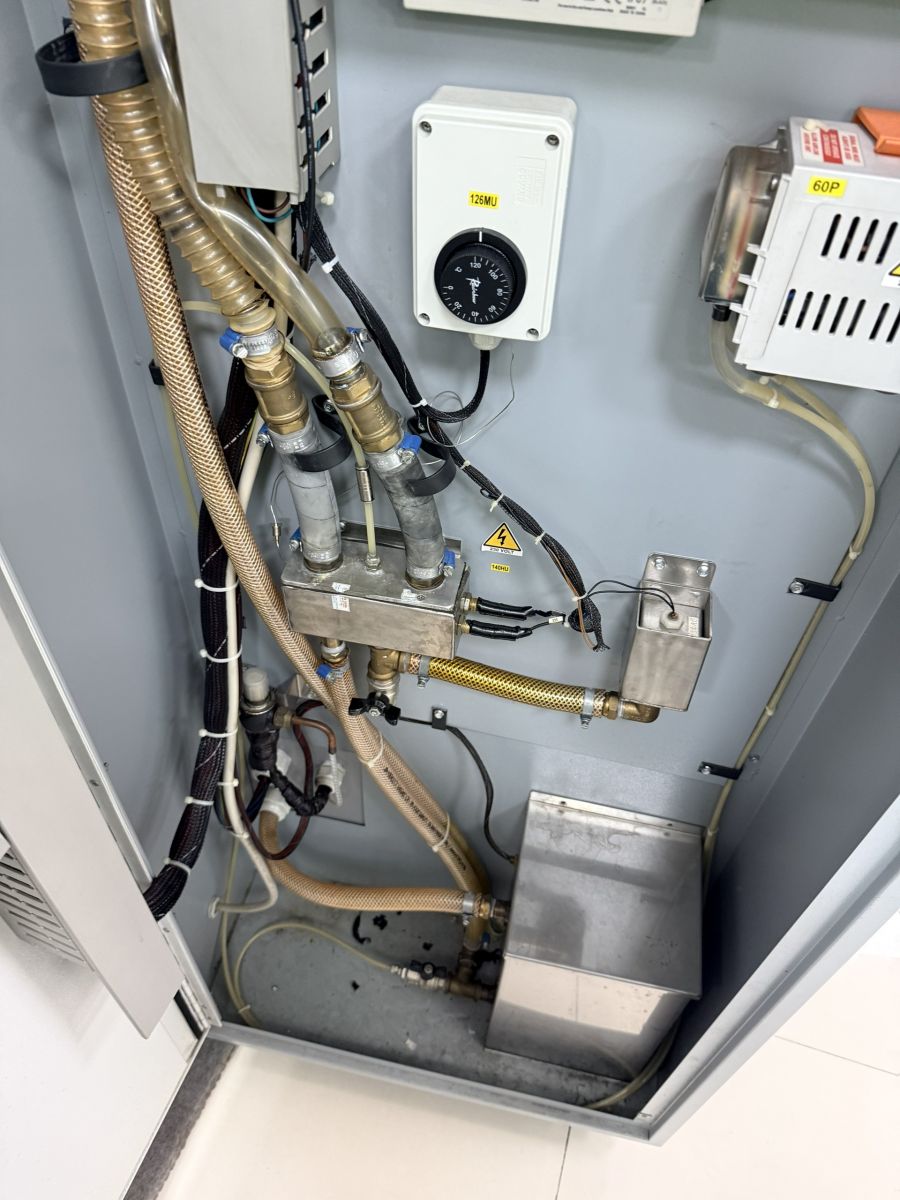
- Compressor re-check
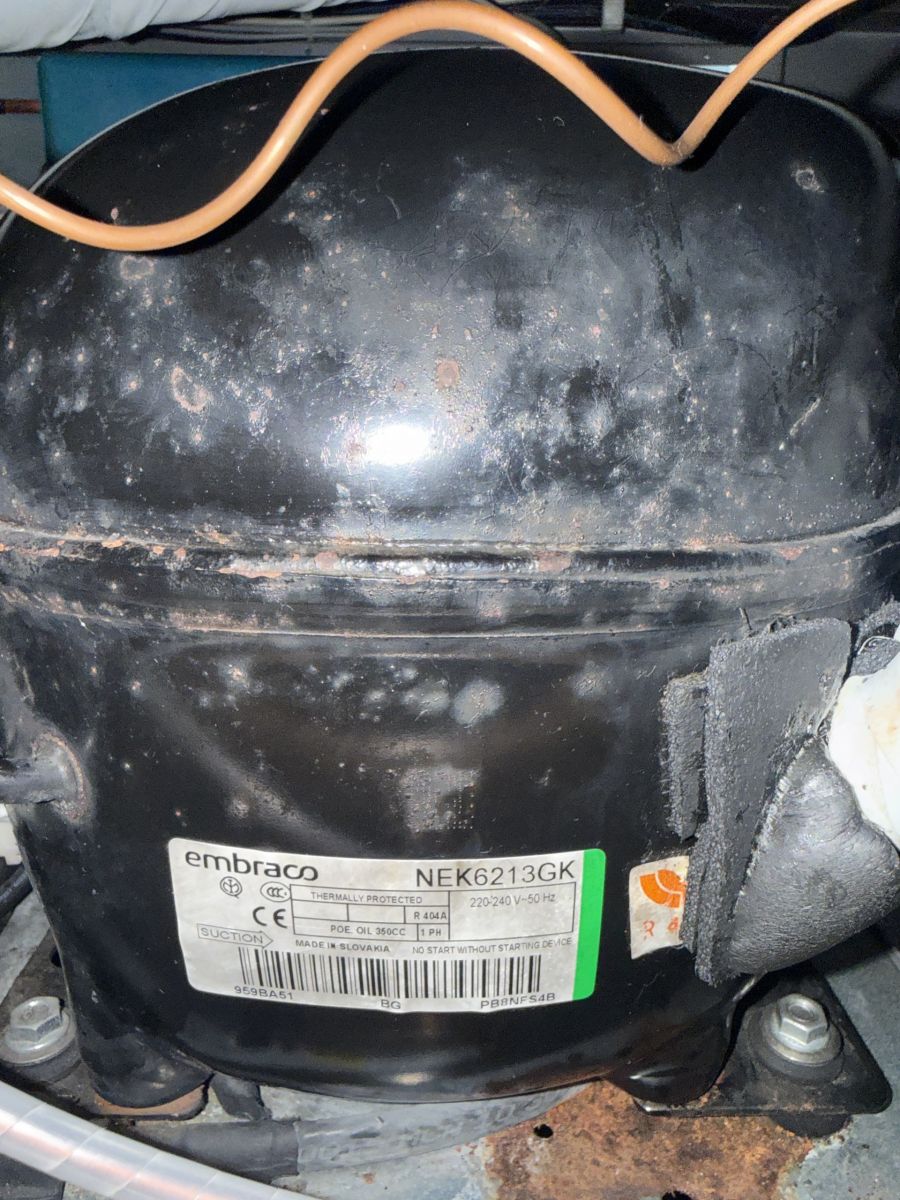
Temperature & Humidity Chamber Repair Services by VintechME
VintechME provides:
- Repair of icing and cooling failure issues
- Troubleshooting TEMP ERR, HUMI ERR
- Refrigerant charging and leak repair
- Periodic maintenance services
- Nationwide fast support
Experienced engineers – fast diagnosis – correct solution – cost optimization for customers

 Tiếng Việt
 English

